







 The Celtic Cycling Circle
 Cycling alongside the Grand Union Canal
 5 Essential Items to Take with You on Your First Cycling Tour
 Favorite Cycling Destinations: Sardinia
 Pamir to Karakoram- cycling the highways on the roof of the world
 4 Wheels 2 Hearts 1 World - A Day in Our lives
 Koga E-Worldtraveller - e-bike review
 Ten tips for tandem cycle touring
 colmandsamstreks - Two Beginners in France
Optimus Polaris Optifuel Camping Stove Review
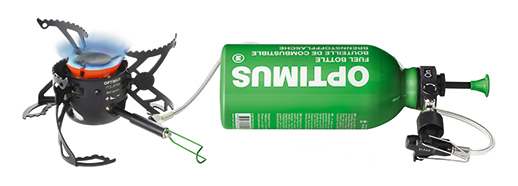 After our Norway tour in 2015 we decided that our Coleman stove had seen better days and needed replacing as it was fine running gas but seemed to misbehave when running petrol. Even after a really good clean and servicing I couldn't get the performance out of that stove that we use to get. We were therefore in the market for a new stove.
These were our criteria for a new stove:
- It needed to be a multi-fuel stove capable of running petrol and gas. We often go to more remote areas where gas canisters are not always easy to get hold off and petrol you can get pretty much anywhere
- Ideally we needed a stove like our Coleman that you didn't have to change the jets to use gas or petrol.
- We needed a stove that we could set to a simmer, all too many multi-fuel aren't very good at producing a low stable flame for simmering.
- Good stable pan supports.
We looked at several multi-fuel stoves and there were 4 contenders:
- Primus MultiFuel III - 436g
- MSR WhisperLite Universal - 549g
- Edelrid Hexon Multifuel - 330g
- Optimus Polaris Optifuel - 475g
Only the Edelrid Hexon Multifuel and the Optimus Polaris Optifuel used only one jet for all fuels and the Edelrid Hexon although much lighter than the Optimus Polaris wasn't good at simmering. Therefore the only stove that seem to meet our criteria was the Optimus Polaris Optifuel.
First impressions
The Optimus Polaris Optifuel at 475g isn't the lightest multi-fuel stove on the market but the build quality of this stove is excellent. The pump unit is solidly engineered and is one of the best pump units we have used. Here are its official specifications:
Fuel - LPG Gas, White gas, Jet Fuel, Diesel, Kerosene
Average burn time = Up to 100 min at maximum output (with 400 ml of fuel)
Dimensions - 140 × 80 × Ø 65
Average boil time for 1 L of water - Approx. 4 min/1 L, depending on climate, altitude etc.
Output - 4200W
Weight - 475g
Kit includes - Stove, FLIPSTOP™ pump, multitool, windscreen, heat reflector, stuff bag, lubricant, user manual
The stove comes with a aluminium windshield, a circular aluminium heat reflector. This heat reflector is also useful as it helps in not scorching what is underneath the stove. It stove also comes with a multi-tool which has all the nut cut-outs you need to service the stove. The multi-tool also has a magnet which can use to move the integrated magnetic cleaning needle. Finally the stove comes with a handy strong bag with a drawstring closure.
PolarDawg Silent Cap
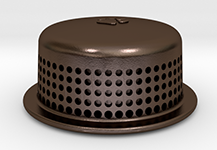 If you do buy one of these stoves then the one thing that we would highly recommend you to do is to buy the 'PolarDawg Silent Cap' which is a 3D printed burner cap made by BernieDawg Stove Products and it is available here.
The 'PolarDawg Silent Cap' really does make a considerable difference to the Optimus Polaris Optifuel. Not only does it considerably reduce the noise level as its name suggests, but it really makes a difference when it comes to simmering. You can turn the stove to a really low level for simmering without it blowing out like it does with the standard flame plate that it comes with. Once you have used the 'PolarDawg Silent Cap' a couple of times it seems to bed in and then stays there.
As we really like to cook decent meals whilst camping, being able to reliably simmer is a big thing for us. With a lot of multi-fuel stoves they are great at boiling water but generally rubbish for actual cooking due to most not being able to turn the flame down to simmer.
Lighting the stove
LPG Gas
Using gas it is quite simple just screw on the resealable gas cylinder, open the stove valve, light the gas and away you go. Where the stove fuel line screws on to the gas cylinder there are two wire supports which can spring out so that you can invert the gas cylinder. this is useful in cold conditions as liquid gas is going down the stove fuel line rather than gas. It is also useful in getting that last drop out of your gas cylinder. One slight problem with using the stove with gas is that there is always gas in the fuel line so when you come to unscrew the gas cylinder there is an escape of gas from the fuel line. You will need to be careful that this doesn’t catch fire, so always unscrew the gas cylinder outside of your tent.
Multi-fuels
If you are using other fuels such as petrol it is a little bit more complicated.
- You will need to attach the pump to the stove which screws on quite easily.
- Ensure that the valve on the stove is turned off and the valve on the pump unit is turned off.
- Then put some pressure into the fuel bottle using the pump and then turn on the valve on the pump. Make sure that the fuel bottle is lying on its side with the word 'On" showing.
- You will now need to prime the burner and get it to a hot enough temperature that when the fuel gets to the burner head it is gas rather than liquid. Either squirt some priming past into the cup under the burner or turn the stove valve on to allow some petrol to dribble into the cup under the burner. Don't allow too much out as it will flare alarmingly. After a couple of practice goes you will start to gauge how much priming paste or fuel you need for priming the stove. We prefer to use priming paste as it is a lot safer and if you just using petrol it burns with a high sooty flame.
- Light the priming paste or petrol in the priming cup and let it heat the burner.
- Once the priming paste or fuel has burnt out and the burner is hot you can open the valve a little to let the petrol flow. If the burner is hot enough you should see petrol vapour coming out of the burner and you can light this with a match or lighter, it should burn with a blue flame. You can then open the stove valve fully. Depending on how much fuel you have in the fuel bottle at this point you may have to give the pump a few stokes to get it running at full capacity. If liquid petrol comes out then the burner isn't hot enough. You will then need to add more priming paste or fuel and start the priming process again. Make sure the stove is fully out before adding more priming paste or fuel.
- To turn off. If you know that you are going to use the stove again you can just turn the stove valve off to stop it, However if you know that you are going to pack the stove away after its use. Then turn the fuel bottle over so that it shows 'Off'. The stove will continue to burn but it will go out after about a minute as it burns out the fuel in the fuel pipe. Once the stove has gone out you can turn off the valve on the pump and dismantle the stove. If you don't do this you will have fuel still in the fuel line and when you come to dismantle the stove it will dribble out, which is a bit of a safety hazard and messy if you use heavier fuels such as kerosene.
What's it like to use?
Well we have been using this stove for the last 4 years and I can honestly say it is one of the most reliable stoves we have used. It is so convenient not having to faff around changing the nozzles for the different fuels. We tend to use the stove with petrol in the evenings when we are sitting outside the tent cooking and then use gas in the mornings as it is so quick to light and safe to use inside our large vestibule. One thing to note is that if you are using the stove with petrol or other liquid fuels you must flip the fuel bottle over to the 'Off' position to let the stove burn out the fuel in the fuel line before you dismantle the stove. The fold out legs make for a very stable platform to safely cook on and the reflector and windshield work well. The only slight problem is that the stove valve sticks a bit sometimes making it a little difficult to turn on, however this can be sorted out by undoing the stove valve, taking it out completely and cleaning the end with a bit of wire wool.
We have used the Optimus Polaris Optifuel with gas canisters, Coleman fuel and unleaded petrol and all have worked well. Gas and Coleman fuel are nice and pure and leave no residues, however there are some residues left by burning unleaded petrol all though these haven't caused too many problems apart from the sticking stove valve. We did once try and use the stove with Diesel, but I certainly wouldn't recommend it. Diesel needs a lot of preheating to get the burner hot enough to make the Diesel which is essentially a light oil to vaporise. Unless you have priming paste the diesel doesn't burn very well as a priming fluid and you have to contend with very sooty flames which are not very good for the environment. Also Diesel is such is a messy fuel if it leaks, at least with petrol if it spills it will evaporate.
One thing to note if you have been using petrol and then switch to gas there may still be a bit of petrol in the fuel line. When you light the gas it will be forced out by the gas and can initialy cause the stove to flare as the petrol will be liquid rather than gaseous.
When using gas cylinders you can use the gas cylinders upright but if it is cold you may wish to invert the cylinder so that liquid gas is going down the fuel line rather that gas to get better heat output. There are a couple of fold out wire supports at the end of the fuel line end where it screws on to the gas cylinder which allows you to do just that. They work fine when using 250g cylinders, however they are little wobbly when using 500g cylinders. We have found that when the gas cylinders are getting low inverting them helps to keep up a good heat output.