







 The Celtic Cycling Circle
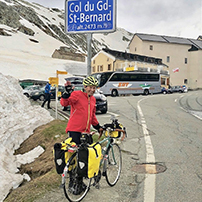 Cycling alongside the Grand Union Canal
 5 Essential Items to Take with You on Your First Cycling Tour
 Favorite Cycling Destinations: Sardinia
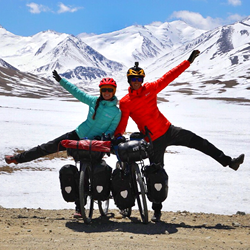 Pamir to Karakoram- cycling the highways on the roof of the world
 4 Wheels 2 Hearts 1 World - A Day in Our lives
 Koga E-Worldtraveller - e-bike review
 Ten tips for tandem cycle touring
 colmandsamstreks - Two Beginners in France
 Cycling in Iceland
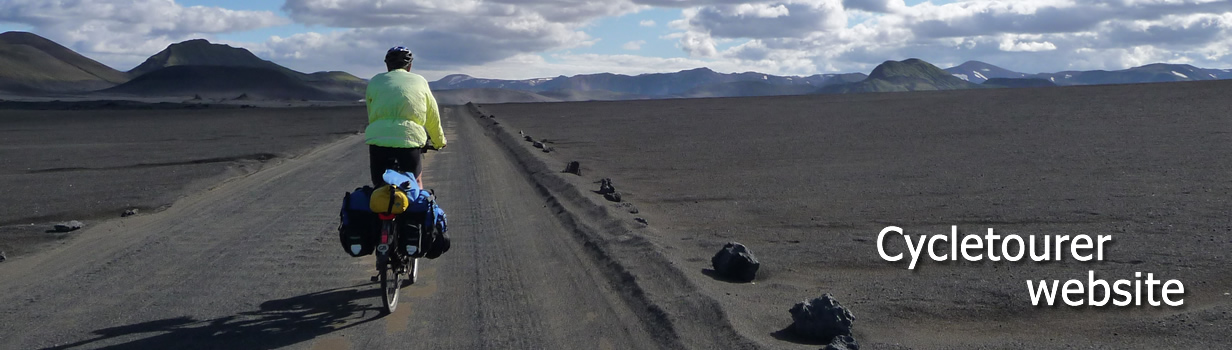
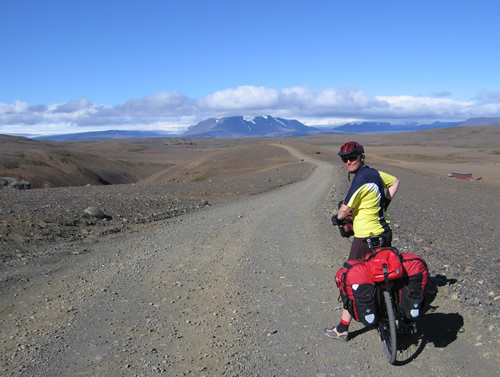 Iceland is such a fascinating country with a unique landscape totally different from any other in northern Europe. Due to its position straddling the mid Atlantic ridge and its proximity to the Arctic Circle Iceland is a landscape of contrasts. From the extensive glaciers and snow capped mountains amidst cold deserts to the geothermal areas of hot boiling mud pools and Geysers. Add in some lava fields, black sand beaches and more thunderous waterfalls than you can shake a stick at and you will have had an experience that you will never forget.
Iceland has some excellent and challenging cycling touring opportunities. The scenery is stunningly varied with many marked contrasts. From quiet rolling pastures, coastal plains of black sands, dramatic waterfalls, to the tougher desert and mountainous areas of the interior with enormous glaciers that cut right down to the sea. The interior with its wild beauty and remote wide vistas, big skies, amazing colours and with the complexity of Iceland's wonderful northern light. Iceland has it all.
The Icelandic population is relatively small and although the Icelandic people are generally reticent, we found them very friendly and welcoming. The climate is generally much cooler than that of mainland Europe due in part to it's latitude and being surrounded by the cold Atlantic. Weather can be varied as it can pick up the fall force of the incoming fronts rolling in from the Atlantic and cold northerly winds coming down from the Arctic, so therefore be prepared for a mix of weather from sunny but cool weather to cold, strong winds and rain.
Cycle Paths
You may find a few cycle path in Reykjavik and some of the larger towns in Iceland but they are few and far between. In some regions you are more likely to see a horse path running alongside the roads rather than a cycle path!
Cycle Routes
As far as I'm aware there are no official marked long distance cycle routes in Iceland at the moment although there are plans for Iceland to become part of the EuroVelo network of designated cycling routes. There are a lot of cyclists who seem to cycle around the ring road route 1, although by doing this you will see a lot of Iceland but you will miss out the interior and the off the beaten track parts of Iceland therefore missing out a lot of what Iceland is all about. I know Iceland is expensive to get to and can be expensive while you are there, but if you are going to do it justice you have to give yourself plenty of time and be prepared to go back!
Campsites
 There are around 125 registered campsites in Iceland and many other un registered campsites, there is a good map of the campsites in Iceland on the Nordic Adventure Travel site here. You will have to plan you route carefully as the sites can be spread apart. Generally we found that most campsites were of a good standard and provided good facilities. Most sites provided good pitches, a sheltered place to cook, good wash-rooms with hot water and good un-metered showers that were usually included in the price, with only a few sites charging for showers. The campsite have a star grading system and there is an explanation of the ratings on this pdf here. There is a free booklet with details some but not all the sites in Iceland, it is available from most tourist offices.
You can find a pdf list of Icelandic campsites here.
Although accommodation generally in Iceland is expensive, camping is relatively cheap and much cheaper than you would pay in the UK. Prices start at around 800kr per person for a basic cold water site and for an average site with showers included it is 1000 - 1200kr per person. The most expensive sites we stayed in were 1500kr per person.
If you are fond of an early night be prepared for a certain amount of noise at some campsites into the late evening especially with the light nights in mid summer. Often in the campsite rules the 'Quiet between' times can be quite late, at one site it stated 'No noise between 01.00 and 8.00!
Wild camping is not actively encouraged due to the fragile nature of most of the terrain, although the UST site does say on public rights that:
"Camping with no more than three tents is allowed on uncultivated ground for a single night, unless the landowner has posted a notice to the contrary. However, campers should always use designated campsites where they do exist. Do not camp close to farms without permission. If a group of more than three tents is involved, these campers must seek permission from the landowner before setting up camp outside marked campsite areas"
It is prohibited to camp in the National parks unless on the designated campsites and we understand that Park Rangers may well impose a fine on those caught.
There is a network of mountain huts in Iceland, they are usually small and offer basic sleeping bag accommodation and run by various touring and outdoor clubs. There is a good map which shows them on the NAT site here. In the summer months they are popular and you will usually need to book your accommodation in advance. The Iceland Touring Association has 13 mountain huts situated mainly in the interior.
Maps
 The best maps for cycling are the Ferdakort maps.
At a scale of 1:250,000 you get the whole of Iceland
on 3 maps. For a map of this scale the detail
is very good and with their recent re-survey of
2005/2006 they are reasonably well up to date.
They have contour shading with contour intervals
of 50m. Road distances are given in km between
most major intersections and there is good information detail
with the petrol stations, accommodation and most of the tourist
points of interest marked. The road surfaces are marked with red for tarmac, brown for gravel roads and yellow for gravel back roads.
The best maps for cycling are the Ferdakort maps.
At a scale of 1:250,000 you get the whole of Iceland
on 3 maps. For a map of this scale the detail
is very good and with their recent re-survey of
2005/2006 they are reasonably well up to date.
They have contour shading with contour intervals
of 50m. Road distances are given in km between
most major intersections and there is good information detail
with the petrol stations, accommodation and most of the tourist
points of interest marked. The road surfaces are marked with red for tarmac, brown for gravel roads and yellow for gravel back roads.
Although these maps come in a plastic wallet unfortunately they are printed on thin paper and tend to split easily on the fold lines if repeatedly folded and unfolded, if you are not careful you can end up with ribbon maps, so you will need to take care of them.
The maps are readily available in most book shops and tourist information centres in Iceland.
GPS maps for Iceland
You can download maps for your GPS from the following sites:
- OSM Map On Garmin
- talkytoaster.co.uk
- frikart.no
- garmin.openstreetmap.nl
- mapas.alternativaslibres.es
- gpsmapsearch.com/
 Iceland Cycling Map
There is an Iceland cycling map available from this website cyclingiceland.is and it can be downloaded as a pdf to a smartphone or tablet to have with you. It has a wealth of information on all the services available in the various areas in Iceland, including campsites, shops, distances, indication of different road surfaces, bike shops and much more. On the back there is a more detailed map of the Reyjavík area with singed cycle routes, an information map of the public transport system, useful web-links and much more information on cycling in Iceland.
The website cyclingiceland.is is also worth a look as it has a wealth of general information on cycling in Iceland including information on accommodation, roads, equipment, weather, health and cycle regulations in Iceland.
Guides
The Iceland Travel Guide - Published by Lonely Planet Publications ISBN 9781741045376 A very useful guide to all things in Iceland.
The Globetrotter Travel guide - Published by New Holland Publishers ISBN 1-84537-012-0 A compact little guide with info on the main points of interest in the various areas of Iceland with a small map useful for initial planning.
Shops
All the major towns have supermarkets and shops but the further you get away from Reykjavik and the south and west the less shops there are in the smaller villages, some of the petrol stations particularly in rural areas have a small grocery section. If your route doesn't take in many towns then you will need to stock up on food when you can and be prepared to carry food for several days. There are absolutely no shops in the interior apart from a small shop and cafe at the campsite at Landmannalaugar. please see the note below. Our Friends Brian and Karen of Wheelbudies have a google map showing the locations of the shops in Iceland here.
Buses & Ferries
 There are no trains in Iceland, but there are plenty of buses that connect the main towns and villages. In the main tourist season there are also numerous excursion buses that link the main tourist areas and sites. All of the bus scheduled services and excursion buses that we used were geared up to taking bikes on their vehicles. Remember it is still at the discretion of the driver as to whether they think there is space available to take your bikes, so a bit of politeness doesn't go a miss. In peak times in the summer there can be a fair few fellow tourers trying to get on the buses, particularly if the weather is bad. At þorlákshöfn ferry terminal we saw 8 bikes being loaded onto a small coach, we were amazed that they all fitted in!
 You will find it easier to get your bikes on to the buses if you board at recognised stopping places rather than flagging them down en-route. There is a charge for the carriage of bikes and this can be between 1000kr to 2000kr per bike depending on the distance travelled.
When we travelled on the coaches our bikes were stored in the luggage compartments underneath the coach. However some opperators use small minibuses some of these minibuses had their rear seats removed to accomodate bikes or a trailer had been added to take luggage and the bikes. On a couple of occasions with small minibuses the bikes were carried on a bike rack attached to the trailer hitch on the back of the minibus. The bus drivers usually like to optimise the space they have available and will expect you to remove all your panniers and make the bikes as small as possible especially if there are several bikes. Have your tools handy, as you will almost certainly be asked to remove the front wheel, rotate the handle bars and lower or remove the seat post. It is a good idea to phone the bus operator in advance before you travel and tell them that you have bikes, particularly those less popular routes that use minibuses as they can then know to add a trailer for your bikes.
After talking to a couple of French girls we met who were touring on a tandem one year said that they had had no problems at all in getting their tandem on to an Icelandic bus. I didn't gather which route they travelled on, but they even reckoned that it had gone in the luggage compartment underneath and that they weren't asked to disassemble it to get it in. Mind you that might have been down to their cute smiles and their lovely French accents!
Listed below are the main bus companies that operate scheduled and excursions services in Iceland.
Bus Companies
Netbus Iceland - Operate scheduled and excursion buses from Reykjavik along the south part of Iceland
SBA- Norðurlieð - Operates routes between Akureyri and Reykjavik over the Kölur route and also between Myvatn, Húsavik and Dettifoss.
Stjornubilar - For buses in the western fjords.
Trex - For buses from Reykjavik to the west, north and north east of Iceland.
Reykjavik Excursions - They run various day excursions to most of the main tourist areas in Iceland.
Vatnajokull Travel - They operates a daily bus service between Höfn and Eglisstaðir using a small minibus and trailer.
Ferries
Seatours operate a ferry service to Flatey Island and the Westfjords. The ferry 'Baldur' does a daily crossing of Breiðafjörður Bay between Stykkishölmur on the Snæfellsnes peninsula and Brjánslækur in the north. You can break your journey on the island of Flatey. The trip takes 1.5 hours to Flatey Island and 2.5 hours to Brjánslækur.
Eimskip operate a ferry service to Vestmannaeyjar. The ferry 'Herjólfur' does two sailings a day throughout the year between þorlákshöfn and Vestmannaeyjar and the trip takes approximately 2 hours and 45 minutes, sometimes longer in foul weather.
Things to watch out for & note
Food & water in the interior
There are absolutely no shops in the interior where you can pick up supplies apart from a small shop and cafe at the campsite at Landmannalaugar. If you intend to cross or travel in the interior you will need to carry plenty of dehydrated food with you to cover the time that you will be there plus some extra emergency food just in-case of bad weather or slow progress.
If you are heading into the interior fresh water could be a problem in some parts near to the glaciers as the rivers have glacial melt water and this water is not potable due to its mineral and sediment content. Most rainfall streams will be OK.
Icelandic roads
Not all of Iceland's roads are
tarmac, a lot of the roads in the south west are tarmac and 92% of the ring road route 1 is tarmac, the
rest is a gravel surface, you can see a map showing the extent of the asphalt roads in Iceland here. Most of the roads across
the interior are gravel roads and the surface can
be quite rutted and loose in places. There are some roads which are sandy and progress can be slow.
You will need good tyres to cope
with the gravel roads. Due to the loose gravel
and sand, wider tyres are best. We took 42mm wide Schwalbe
Marathon XR's and we were glad of their width and
toughness!
The gravel roads can be tough on the 'Derrière' as the passing 4X4's and cars can produce a 'Washboard' surface. Either a sprung saddle or a suspension seat post is useful. One of the German lads we met broke his seat clamp on the gravel roads of the Kölur route and had to catch a bus to Reykjavik to get a new one.
Some of gravel roads in the interior highlands can be quite steep in places and with a loose surface it can be nigh on impossible to keep traction going with a loaded touring bike. On several occasions we had to push the bikes up some of the steeper hills, which makes for tough going and slow progress.
For up to date information on the state of the Icelandic roads, visit the Vegagerðin (Icelandic Road Administration) site for a visual map of roads conditions, showing roadwork's, roads that are closed, roads that are only passable by 4X4's and the current weather conditions with temperatures and wind speeds.
In the winter most of the interior mountain roads will be blocked by snow and some roads will not be free of snow until mid June to early July. The Vegagerðin (Icelandic Road Administration) publish weekly during the first weeks of summer a information map on the mountain road conditions as well as information on the opening times for the mountain roads.
River crossings in the interior
 When traveling on roads in the
interior you will find that not all the rivers have
bridges and the crossing points may be fords. Most but not all the
fords are marked on the Ferdakort maps by a 'V' symbol.
Some of these fords are shallow and can be managed easily others are wide and deep and are a more serious undertaking. The depth of these fords will depend on the amount
of recent rainfall and the seasonal melt water. If you are in
any doubt as to state of the river fords on your route it is best
to enquire at the local tourist information office
before setting out or the wardens of the mountain huts on route. If you do need to cross the rivers
first check up and down stream to see if there is a footbridge. On some of the deeper fjords near the popular walking areas footbridges are sometimes provided to the side away from the road crossing point. If there is no footbridge, assess the current, the nature of the river bed and the depth first to choose the shallowest and best crossing
point. Do not wade across in bare feet, wear something on you feet to protect them from possible sharp rocks and to give you better grip on the slippery rocks.
Depending on the weather and the time of the year the water can be numbingly cold, therefore some cyclists carry neoprene sailing boots especially
for this purpose. We used our Teva sandals which we have as camp shoes, they have a good grip sole and although they have no insulation as soon as our feet were dry and back in dry socks and boots they soon warmed up. Fast flowing
rivers will very quickly strip out the grease in the bottom bracket
and axles of your bike, therefore if the river is deeper than your bottom bracket and axles consider ferrying your panniers across first and then
carrying your bike across on your shoulder.
When traveling on roads in the
interior you will find that not all the rivers have
bridges and the crossing points may be fords. Most but not all the
fords are marked on the Ferdakort maps by a 'V' symbol.
Some of these fords are shallow and can be managed easily others are wide and deep and are a more serious undertaking. The depth of these fords will depend on the amount
of recent rainfall and the seasonal melt water. If you are in
any doubt as to state of the river fords on your route it is best
to enquire at the local tourist information office
before setting out or the wardens of the mountain huts on route. If you do need to cross the rivers
first check up and down stream to see if there is a footbridge. On some of the deeper fjords near the popular walking areas footbridges are sometimes provided to the side away from the road crossing point. If there is no footbridge, assess the current, the nature of the river bed and the depth first to choose the shallowest and best crossing
point. Do not wade across in bare feet, wear something on you feet to protect them from possible sharp rocks and to give you better grip on the slippery rocks.
Depending on the weather and the time of the year the water can be numbingly cold, therefore some cyclists carry neoprene sailing boots especially
for this purpose. We used our Teva sandals which we have as camp shoes, they have a good grip sole and although they have no insulation as soon as our feet were dry and back in dry socks and boots they soon warmed up. Fast flowing
rivers will very quickly strip out the grease in the bottom bracket
and axles of your bike, therefore if the river is deeper than your bottom bracket and axles consider ferrying your panniers across first and then
carrying your bike across on your shoulder.
Wind
Strong winds can be a serious problem in Iceland especially as there are very few trees to give you shelter. They are particularly a problem if it's a side or head wind, we were nearly blown off the road on a couple of occasions and heading into a head wind can seriously reduce your speed. We met a German couple on the the Highland Kölur route going South to North, due to a 25 -30 mph head wind and going up hill they had only managed to cover 25km in 2 days. If you are lucky and the wind is behind you you can do some amazing speeds, coming over the Highland route we managed to do 15mph on the flat without pedalling!
Due to the high winds and lack of vegetation in the interior dust storms can be a problem in some parts, so good rap-around glasses and a scarf for the mouth can be useful.
Weather
Be prepared for cold days and nights in summer, while we were there in late July and August 2007 the day time temperatures varied between +5 to +14C, with some nights in the interior near to freezing. Take appropriate warm and wind proof clothing and a good layering system so that you can adjust your warmth to the varied conditions. We found a pair of warm gloves and a warm hat with ear protection essential.
When we were touring in 2008 at the same time of year we had much warmer temperatures with Iceland having a heat wave with temperatures about 10 degrees hotter than normal, one day when we were in the western fjords we had a temperature of 26ºC the hottest day there since about 1940, but don't count on the same conditions in the future!
On our tour in the summer of 2009 in late July and August the temperatures were very similar to those of our 2007 tour and on 21st August we had a snow storm on the Kölur route with snow lying above 700m for 3 days.
It can rain in Iceland, so good waterproofs including leggings, overshoes and gloves are a necessity.
For a weather forecast in English please look at the Icelandic Met Office site.
The best time to go
You have to think of Iceland as having a long winter with a very short spring, summer and autumn. The winter snows come at the end of October and then don't go until the end of May. Many of the interior roads are not open until mid to late June due to snow. To a certain extent you can loosely think about late May/June being Iceland's spring, July it's summer and late August/September it's Autumn.
Language
English is the Icelandic peoples second language and all but a few of the older Icelanders speak good English. They are taught it at school and they watch a lot of English and American TV with Icelandic sub-titles.
Toilets
There aren't that many public toilets in Iceland. Neither are there many trees or large rocks to dodge behind, so do a Prince Charles and take every opportunity to go when you do see a public loo!
 Tunnels
There are ten main tunnels in Iceland, nine of which are open to cyclists and one that is banned to cyclists. Like cycling through any tunnel you need to have good lights and reflectors on your bikes so you can see and be seen by other road users. There are some tunnels in Iceland which are single track with passing places.
See our Icelandic tunnel map for details of where all the tunnels are in Iceland with comments from the various contributors who have ridden through them.
Dust
If you do go into the interior and travel a lot along the gravel and sandy roads your bike can be covered in a fine dust. It tends to get in every where especially in your transmission such as your chain, front and rear mech etc.. As it can be quite abrasive stuff you will need to give everything a good clean when you can.
Cycling Regulations
- When cycling on roads, cyclists should cycle on the right side of the lane farthest to the right, and allow motor vehicles to pass.
- Children 14 years and younger are required to use bicycle helmets when cycling.
- Cycling on pavements and walking paths is legal in Iceland, but cyclists have to show regard for pedestrians.
- Bicycles are required to have front and rear lights when cycling in darkness, through tunnels or when visibility is poor, but not in daylight.
- It is prohibited to damage the vegetation and soil by cycling off-road or off-track. The tire tracks may cause erosion, and plants grow very slowly in Iceland.
Getting to Iceland from the UK
There are several airlines that fly to Iceland, here are a few links that might help you.
- Icelandair - Flights to Iceland.
- Iceland Express - Cheap flights to Iceland.
- Wow air - Cheap flights to Iceland.
If you are flying into Keflavík airport with your bikes you need to be warned that the airport terminal itself is a bike free zone so don't try and assemble your bike as soon as you get out of the custom area there is now a specific bike assemby place in Keflavik airport complete with some tool stations. Apparently you can store your bike boxes at the Bilahotel, which is 300 m away from the airport.
Unfortunately the Smyril Line have abandoned their ferry service between Scrabster and Sey∂isfjör∂ur in Iceland for the 2009 season.
Further information Links
More cycle touring information
- Touring Notes: Iceland - Ivan Viehoff's very useful Iceland info. based on several tours in Iceland between 1995 and 2005. Well worth a read for additional information.
- Mike Erens's Iceland Pages - A Dutch guy with wealth of information and photos. He has a great links page with a list of Icelandic tour reports.
- The Icelandic Mountain Bike Club - Touring information on Iceland from the locals.
Travelogues of Iceland tours
- A Bicycle Tour in Iceland - Iceland travelogue of a tour in June 2009 by Brian & Karen of Wheelbuddies.
- Cycling on Iceland - Iceland travelogue of a tour in July 2008 by Markus & Tora from Sweden.
Tourist Information
There is a Tourist information Office in most of the major towns and tourist areas. They have information on places of interest in their local area and sell maps of the area. They are usually most helpful and will sell you tickets for the buses, excursions and local attractions using a voucher system which is quite handy.
- Iceland Tourist Board - News on Iceland.
- Visit Iceland official travel guide - Holiday information & Iceland Hotels.
- Welcome to Iceland - General information on places of interest, accommodation, history, geology and travellers facts for Iceland.
- North Iceland -General information on places of interest, accommodation, events and what to do in north Iceland.
- Westmann Islands -General information on places of interest, accommodation, events and what to do on the westmann islands.
General Information
- NAT - The National Adventure Travel site. A very useful travel guide site with information on accommodation, buses, ferries, internal flights and practical information.
- Icelandic weather forecasts from the Iceland Meteorological Office.
- UST - The Environment and Food Agency of Iceland which controls the National Parks.
- Hostelling International Iceland - Information on the 25 youth hostels in Iceland.
- Natural History of Iceland - Excellent information and pictures of the natural history of Iceland.
- Flora of Iceland - Excellent information and pictures of the flora of Iceland.
- Krafla Power station
- The
Map shop, 15 High Street, Upton-upon-Severn, Worcs.
WR8 0HJ England
Tel: 01684-593146 Fax:01684-594559 e-mail :